Power station or gas generator for home backup?
A power station wins on silence, safety and convenience; a generator wins on cost per watt and unlimited runtime with fuel. For a one-day outage, a 3 kWh power station covers the essentials; two days of fridge, Wi-Fi, lights, phones and a CPAP takes about 4,780 Wh, which means a 3 kWh unit plus solar. For a week-long outage or whole-home loads like central AC and a well pump, you still want a generator, or both.
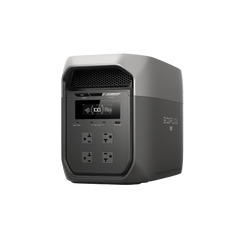
3 to 5-year maker warranty · checkout and delivery on Amazon
Complete the kit: 220 W EcoFlow solar panel · 12-gauge extension cord · Kill A Watt meter
Side by side
| Battery power station | Gas inverter generator | |
|---|---|---|
| Cost for about 2,000 W | $879 (EcoFlow DELTA 3 Max) | About $500 to $1,200 (Champion 2500 to Honda EU2200i) |
| Runtime | About 5.8 hours at 300 W, then recharge | About 8 to 11.5 hours per tank of about a gallon at 25% load (Honda EU2200i, Champion 2500), as long as you have gas |
| Noise | Silent to a faint fan | About 48 to 57 dBA at 23 ft, by the makers' figures |
| Where it can run | Indoors, bedroom included | Outdoors only, at least 20 ft from the house with the exhaust pointed away (CDC); carbon monoxide from portable generators kills nearly 100 people a year in the US (CPSC) |
| Maintenance | Top up the charge every 3 months or so in storage | Oil changes, fuel stabilizer, regular test runs |
| Fuel in a disaster | Wall, car, or solar | Gas stations need power to pump |
| Rated life | 800 to 6,000 charge cycles across the units we cover | No maker publishes an hours rating; it depends on oil changes and storage |
Who should buy which
- Apartment, condo, or anywhere you cannot run an engine outdoors: power station, no contest.
- Medical equipment, sleeping household, or you want zero effort: power station.
- Rural home with a well pump, septic pump, or electric heat: generator, possibly with a battery for silent nights.
- Hurricane and ice-storm country: both, if budget allows. The generator recharges the battery in a few hours, then goes quiet.
Air conditioning is where a generator still wins most often; our window AC guide shows what a battery can and cannot do.
Going with a generator? Size it for your list with our generator calculator.
Our picks
We earn a commission if you buy through these links. It does not change the ranking (how we rate).
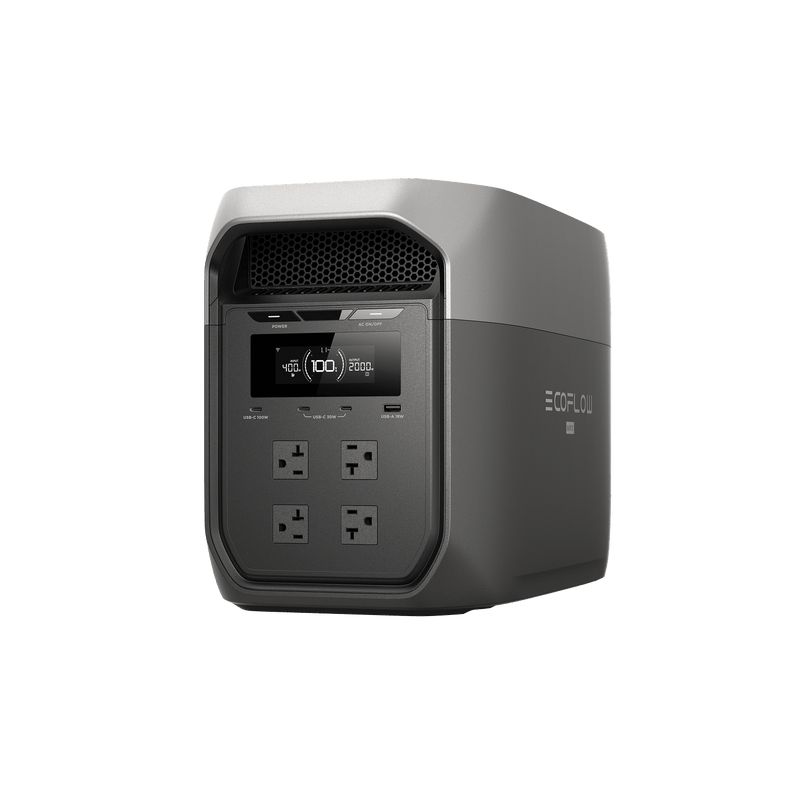
DELTA 3 Max
The 2 kWh class is where a battery first replaces a small generator for most households: a fridge, lights and Wi-Fi for about a day.
3 to 5-year maker warranty · checkout and delivery on Amazon
Spec source
HomePower 3000
A 3 kWh unit with 3,600 W output starts almost anything a 3,500 W generator would, silently.
3 to 5-year maker warranty · checkout and delivery on Amazon
Spec source
DELTA Pro 3
With 240 V output and add-on batteries, this is the closest a portable battery gets to a whole-home generator.
3 to 5-year maker warranty · checkout and delivery on Amazon
Spec sourceFull specs and runtimes: EcoFlow DELTA 3 Max, Jackery HomePower 3000, EcoFlow DELTA Pro 3.
Prices are each maker's own store price on the date shown on each card; buy links go to Amazon, where the price can differ, and Bluetti units also link to Bluetti's own store. Adjust the devices and days in the finder for your own numbers, or see all 22 models.
Worth adding
- Reliance Controls PB30 power inlet box: The outside half of a safe generator or power station hookup. An electrician wires it to a transfer switch.
- Reliance Controls Pro/Tran 2 transfer switch: Feeds chosen circuits (furnace, fridge, well pump) from a power station or generator without backfeeding the grid. Installed by an electrician.
Amazon links; we may earn a commission.
Common questions
Can a power station replace a whole-house standby generator?
Not at portable prices. A standby generator or a wall-mounted home battery of 10 kWh or more is a different product category, typically several thousand dollars to $15,000 or more installed.
Can I charge a power station from a generator?
Yes, and it is one of the best ways to use both. A 2,000 W inverter generator delivers about 1,600 to 1,800 W continuously, so a 2 kWh unit takes roughly 1.5 to 2.5 hours; set the station's charge rate below the generator's running watts.