How many watt-hours do I need for a power outage?
Multiply each device's watts by the hours you will run it, add the results, then divide by 0.85 for inverter losses: that is the battery size in watt-hours. A fridge, Wi-Fi, phones and lights for one day use 1,710 Wh at the outlets, so the battery needs about 2,020 Wh; the lowest-priced unit we track that holds it is the EcoFlow DELTA 3 Max at $879. The table below gets you your own number in about five minutes.
On this page
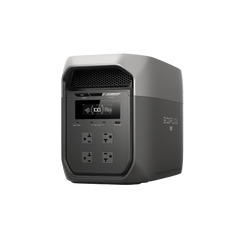
3 to 5-year maker warranty · checkout and delivery on Amazon
Complete the kit: 220 W EcoFlow solar panel · 12-gauge extension cord · Kill A Watt meter
 Bluetti AC1801,152 Whtoo small
 Goal Zero Yeti 15001,505 Whtoo small
 Anker SOLIX S20002,010 Whtoo small
 Jackery Explorer 2000 v22,042 Wh1 day
 EcoFlow DELTA 3 Max2,048 Wh1 day
 Anker SOLIX C2000 Gen 22,048 Wh1 day
 Bluetti Elite 200 V22,074 Wh1 day
 Bluetti Apex 3002,765 Wh1.4 days
 Bluetti Elite 3003,014 Wh1.5 days
 Jackery HomePower 30003,072 Wh1.5 days
 Anker SOLIX F3800 Plus3,840 Wh1.9 days
 Goal Zero Yeti PRO 40003,994 Wh2 days
 EcoFlow DELTA Pro 34,096 Wh2 days
Step 1: list what you would run
| Device | Average watts | Hours a day | Watt-hours a day |
|---|---|---|---|
| Refrigerator (full size) | 45 W | 24 | 1,080 Wh |
| Wi-Fi and modem | 15 W | 24 | 360 Wh |
| Phones (2 to 3 phones) | 10 W | 3 | 30 Wh |
| LED lights (4 lamps) | 40 W | 6 | 240 Wh |
| Laptop | 60 W | 6 | 360 Wh |
| CPAP (no humidifier) | 40 W | 8 | 320 Wh |
| TV (55 inch) | 100 W | 4 | 400 Wh |
| Box fan | 75 W | 8 | 600 Wh |
| Electric blanket | 100 W | 8 | 800 Wh |
These are averages over the time a device is on. A fridge's compressor cycles on and off, so it averages about 45 W even though it runs at about 150 W. The label on your own device, or a plug-in watt meter, gives a better figure; change the hours to match how you would really use it.
Step 2: add it up and allow for losses
| What you run for a day | At the outlets | Battery needed | Lowest-priced unit that holds it |
|---|---|---|---|
| Wi-Fi, phones and lights | 630 Wh | 750 Wh | Anker SOLIX C1000 Gen 2, $530 |
| The fridge, plus the above | 1,710 Wh | 2,020 Wh | EcoFlow DELTA 3 Max, $879 |
| A CPAP and a laptop, plus the above | 2,390 Wh | 2,820 Wh | Bluetti Elite 300, $1,299 |
Battery needed is the outlet total ÷ 0.85, rounded up to the next 10 Wh. The inverter that makes household AC loses about 15% as heat, so a 1,000 Wh battery runs about 850 Wh of AC devices.
Step 3: check the watts, not only the watt-hours
Watt-hours decide how long it lasts; watts decide whether it runs at all. Everything on the fridge list running at once needs about 300 W of output with headroom, and the fridge's compressor start needs about 1,300 W of surge. A unit can hold plenty of energy and still shut off if a motor start is bigger than its surge rating; the fridge guide lists which units clear it.
Step 4: multiply by days, or add solar
Two days of the fridge list needs about 4,030 Wh. Past a day or two, solar can stand in for a bigger battery: a 200 W panel puts back about 600 to 850 Wh on a sunny day. See how much solar you need and the two-day outage plan. Or put your list into the finder, which does this math for every unit we track.
The units that fit
We earn a commission if you buy through these links. It does not change the ranking (how we rate).
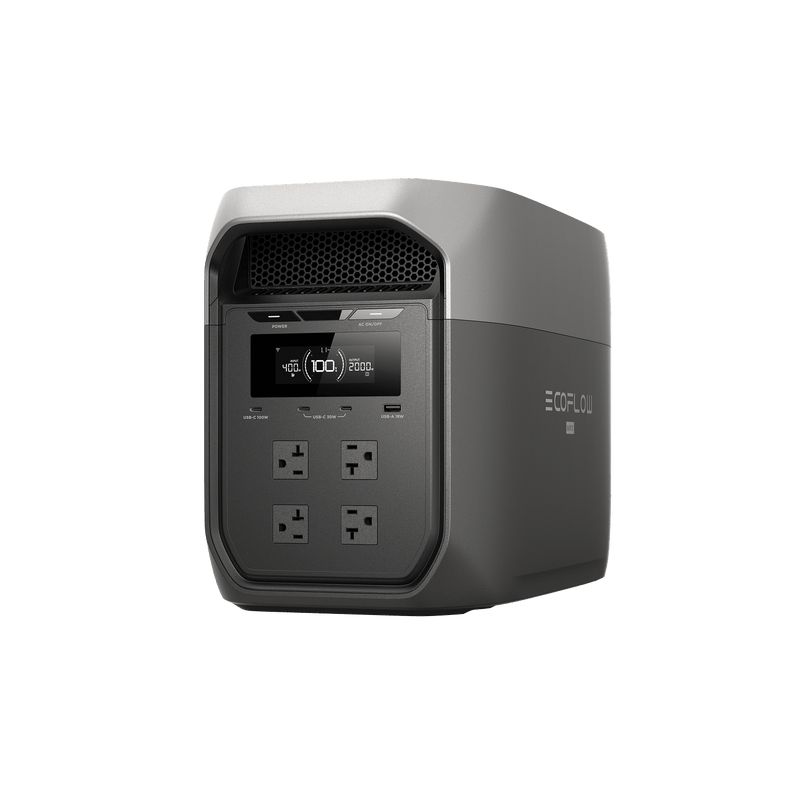
DELTA 3 Max
Cheapest unit that covers the refrigerator, Wi-Fi and modem and 2 more for about 1 day.
3 to 5-year maker warranty · checkout and delivery on Amazon
Spec source
Explorer 2000 v2
Lighter and smaller, and still covers it for about 1 day.
3 to 5-year maker warranty · checkout and delivery on Amazon
Spec source
F3800 Plus
Extra headroom: about 1.9 days on one charge, and it accepts add-on batteries.
5-year maker warranty · checkout and delivery on Amazon
Spec sourceFull specs and runtimes: EcoFlow DELTA 3 Max, Jackery Explorer 2000 v2, Anker SOLIX F3800 Plus.
Prices are each maker's own store price on the date shown on each card; buy links go to Amazon, where the price can differ, and Bluetti units also link to Bluetti's own store. Adjust the devices and days in the finder for your own numbers, or see all 22 models.
Worth adding
- P3 Kill A Watt P4400 plug-in meter: Reads the real watts and watt-hours of anything you plug into it, so you size from your own fridge instead of our typical figure.
Amazon links; we may earn a commission.
Common questions
Why divide by 0.85?
A power station stores DC and converts it to household AC through an inverter, which loses about 15% as heat. Devices charged from the USB or 12 V ports lose less, so 0.85 is a safe planning figure.
Should I buy exactly the size I worked out?
Leave some room. Batteries lose capacity with age, cold weather cuts what they deliver, and most outages bring a device you forgot to list.
Power is one part of the plan. The full power outage checklist covers water, food, light, heat and safety.