What food should you keep for a power outage?
Count calories, not servings.
Our picks 6
Links go to Amazon; we earn a commission if you buy. It never changes the list. How we pick

Mountain House Adventure Weekender Kit (6 pouches)
Real meals that keep for decades
Check price on Amazon
ReadyWise 60-serving emergency food bucket
Stackable bucket of freeze-dried pouches
Check price on Amazon
Datrex 3600-calorie emergency food bar
A day of food in a coat pocket
Check price on Amazon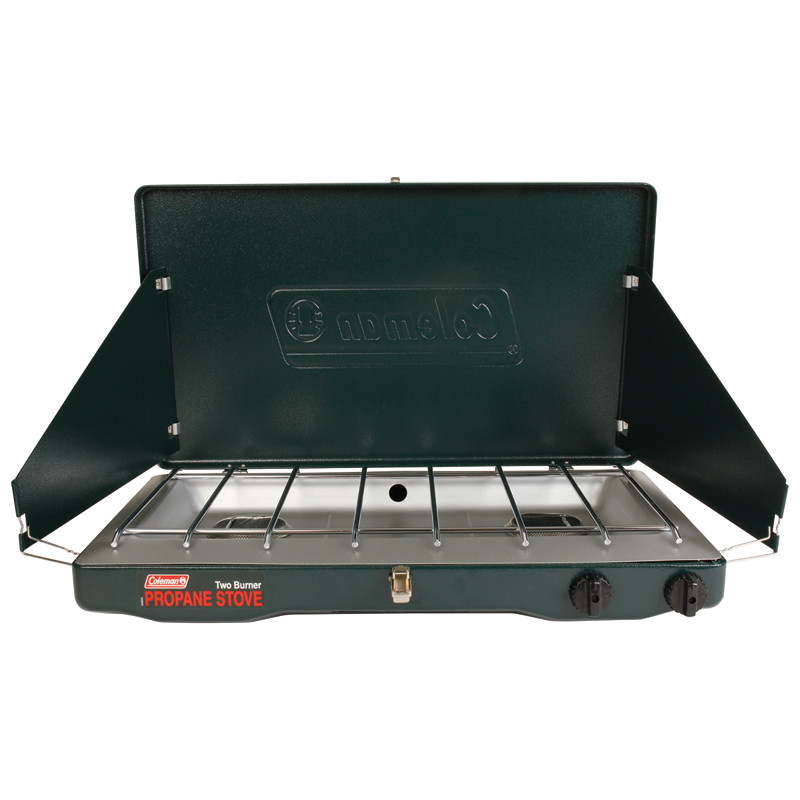
Coleman Classic two-burner propane stove
Hot food and coffee, outdoors only
Check price on AmazonColeman Classic 70-quart hard cooler
Saves the fridge food past 4 hours
Check price on Amazon
AcuRite wireless fridge and freezer thermometer
Tells you if food is still safe
Check price on AmazonBuying the set? Coleman Classic two-burner propane stove + AcuRite wireless fridge and freezer thermometer
Add all 2 to your Amazon cartHurricane season runs to November 30. Get it before the next outage: once the power is out, you live on what is already in the house.
Keep at least 3 days of food that needs no fridge, no cooking and little water: canned meat, fish and beans, peanut butter, crackers, cereal, dried fruit and nuts (Ready.gov). Plan on about 2,000 calories per adult per day, and eat what is in the fridge first. For longer stretches, a freeze-dried kit keeps for decades, but read its total calories: its servings are often snack-sized.
- 2,000
- calories per adult, per day (FDA)
- 4 hrs
- a closed fridge keeps food safe (USDA)
- 48 hrs
- a full, closed freezer holds (USDA)
Count calories, not servings
Kit makers list servings of roughly 150 to 300 calories each, so a bucket sold as "60 servings" is not 60 meals. Divide the total calories on the label by 2,000 per adult per day, the reference the FDA uses on every Nutrition Facts label, to see how many days it really covers. Active adults, teenagers and anyone doing cleanup in the cold burn more; small children need less.
The calculator above does that division for your household.
What to stock
- No cooking, no fridge, little water (Ready.gov): canned meat, fish, beans, fruit and vegetables; peanut butter; crackers, cereal and granola; protein bars; dried fruit and nuts; shelf-stable milk and juice.
- Go easy on salt. Salty food makes you thirsty, and water may be the scarcer supply. Canned food packed in water or juice also gives you liquid.
- Food your household will eat. Stock what you already buy, and use and replace it as it nears its date. That rotation costs nothing extra and nothing goes stale.
- Special needs: formula and baby food (plus the water to mix formula), food for any medical diet, and food for pets.
- A manual can opener, paper plates and utensils, so you do not spend water washing dishes.
Eat the fridge first, then the freezer
A closed fridge keeps food safe for about 4 hours. A full freezer holds for about 48 hours, a half-full one about 24, if the door stays shut (USDA). So eat perishables first, then frozen food as it thaws, and save the pantry for last.
- Throw out meat, fish, eggs, milk and leftovers that sat above 40 °F for more than 2 hours. Never taste food to decide (USDA).
- Frozen food that still has ice crystals, or is at 40 °F or below, can be refrozen or cooked.
- If the outage will run past 4 hours, move fridge food into a cooler with ice. About 50 lb of dry ice keeps a full 18 cubic foot freezer frozen for 2 days (USDA). Handle dry ice with gloves and never seal it in an airtight box.
Or keep the fridge running: a 1 kWh power station like the Bluetti Elite 100 V2 runs a typical full-size fridge for about 19 hours. See how long each size lasts.
Cooking without power
A camp stove, a grill or a propane burner works, outdoors only, well away from windows and doors. Using one indoors or in a garage can fill the house with carbon monoxide, which you cannot smell (CDC). A battery carbon monoxide alarm is cheap insurance.
Freeze-dried meals need hot water, so count that water in your water supply. A power station can also run an electric kettle or a hot plate for a few minutes at a time, but that drains a battery fast; check the runtime calculator first.
Grocery pantry or long-term kit?
For a few days, the pantry wins: it is cheaper, it is food you like, and you rotate it as you go. A freeze-dried kit earns its place when you want weeks of food that you can put in a closet and forget for years, or for a cabin, a car or a go-bag. Many households do both: a rotating pantry for the first week and a kit behind it.
Keeping the fridge, Wi-Fi and phones going too? See how many hours each power station runs the things you would plug in.
Common questions
Do I need an emergency food kit, or is the pantry enough?
For three days, the pantry is enough if the food needs no fridge or cooking: canned meat and beans, peanut butter, crackers, cereal and dried fruit (Ready.gov). A kit earns its place for longer outages, or as food you can store and forget for decades. Either way, count calories, not servings.
What should I eat first in a power outage?
Perishables from the fridge, while they are still cold, then frozen food as it thaws, then shelf-stable food. A closed fridge keeps food safe for about 4 hours and a full freezer for about 48 (USDA).
How much emergency food do I need?
At least 3 days per person (Ready.gov). At about 2,000 calories per adult per day, that is 6,000 calories each. Check a kit's total calories, not its servings.
How long does freeze-dried emergency food last?
Sealed, the main brands list 25 to 30 years. Mountain House guarantees its pouches and cans still taste good after 30 years, and ReadyWise lists up to 25. Keep them somewhere cool.
Is food in the fridge safe after a power outage?
If the door stayed shut and the power was out under 4 hours, yes. Throw out perishables that sat above 40 °F for more than 2 hours, and never taste food to decide (USDA).
Can I cook on a gas stove during a power outage?
Often the burners, lit carefully with a match, but check your manual: a gas oven with an electric igniter will not light without power, and some newer models will not light at all. Never use a gas oven or stovetop to heat the house; it can build up carbon monoxide (CDC).
Sources
- Ready.gov: Build a kit
- USDA: Keeping food safe during an emergency
- FDA: Daily value on the Nutrition Facts label (2,000 calories)
- CDC: Carbon monoxide poisoning prevention
- Mountain House: 30-year shelf life
Checked October 29, 2026. Product ratings are from each maker's listing. See our editorial standards.