What size generator do you need for a power outage?
Add the running watts. Then the biggest motor.
Our picks 6
Links go to Amazon; we earn a commission if you buy. It never changes the list. How we pick
Champion 4500 W dual fuel inverter generator
The essentials for most homes, gas or propane
Check price on AmazonHonda EU2200i inverter generator
Quiet and light, runs the fridge and Wi-Fi
Check price on AmazonWestinghouse WGen9500DF dual fuel generator
Most of a house, a 240 V well pump included
Check price on Amazon
First Alert CO400 battery-operated CO alarm
Keeps working when the power is out
Check price on Amazon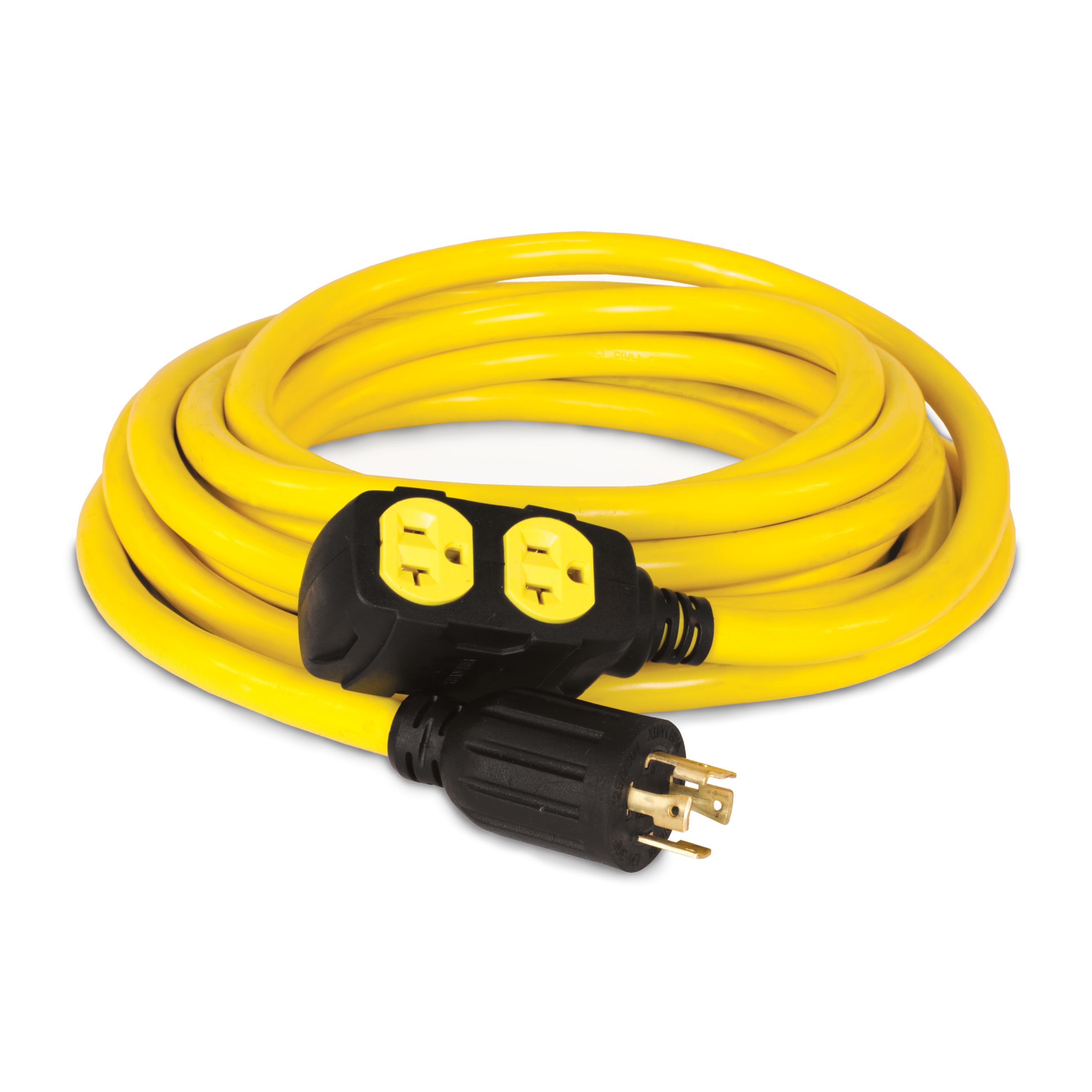
Champion 25 ft 30 A L14-30 generator cord
Connects a generator to a transfer switch
Check price on AmazonSTA-BIL Storage fuel stabilizer
Keeps stored gas from going stale
Check price on AmazonBuying the set? Champion 4500 W dual fuel inverter generator + First Alert CO400 battery-operated CO alarm + STA-BIL Storage fuel stabilizer
Add all 3 to your Amazon cartHurricane season runs to November 30. Get it before the next outage: once the power is out, you live on what is already in the house.
Add up the running watts of everything you will run at once, then add the extra starting watts of the single biggest motor, such as the fridge, sump pump or well pump. A fridge, freezer, furnace blower, sump pump, window AC, lights and Wi-Fi together need about 2,255 W running and 3,305 W starting, a job for a 3,500 W generator. Add a well pump and you also need 240 V. Tick your list in the calculator for your own number.
- 20 ft
- from the house, at least (CDC, CPSC)
- 2,255 W
- running for a typical home's essentials
- 240 V
- needed for most well pumps
Running watts and starting watts
Every generator lists two figures. Running (or rated) watts is what it can supply all day. Starting (or peak) watts is the short burst it can give for a second or two while a motor spins up. A fridge runs on about 150 W but needs about 1,200 W to start.
Size by adding the running watts of everything on at once, then adding the extra starting watts of only the biggest motor. Motors rarely start at the same instant, so you do not add every surge together. Leave some headroom: a generator run near its limit all day works harder, burns more fuel and trips sooner.
Three sizes that cover most homes
| Size | Runs | Example |
|---|---|---|
| 1,800 W running, 2,200 W starting | A fridge, lights, Wi-Fi, phones, a CPAP and a TV: 355 W running, 1,405 W starting. | Honda EU2200i |
| 3,500 W running, 4,500 W starting | All of that plus a freezer, furnace blower, sump pump and window AC: 2,255 W running, 3,305 W starting. | Champion 4500 W dual fuel inverter |
| 9,500 W running, 12,500 W peak, 120/240 V | All of that plus a 240 V well pump (3,255 W running, 4,405 W starting), with room for a microwave or coffee maker. Not central AC or an electric range on top. | Westinghouse WGen9500DF |
Gasoline ratings from each maker. On propane, running watts drop by roughly 10%.
 QuietestHonda EU2200i inverter generatorQuiet and light, runs the fridge and Wi-Fi
Check price
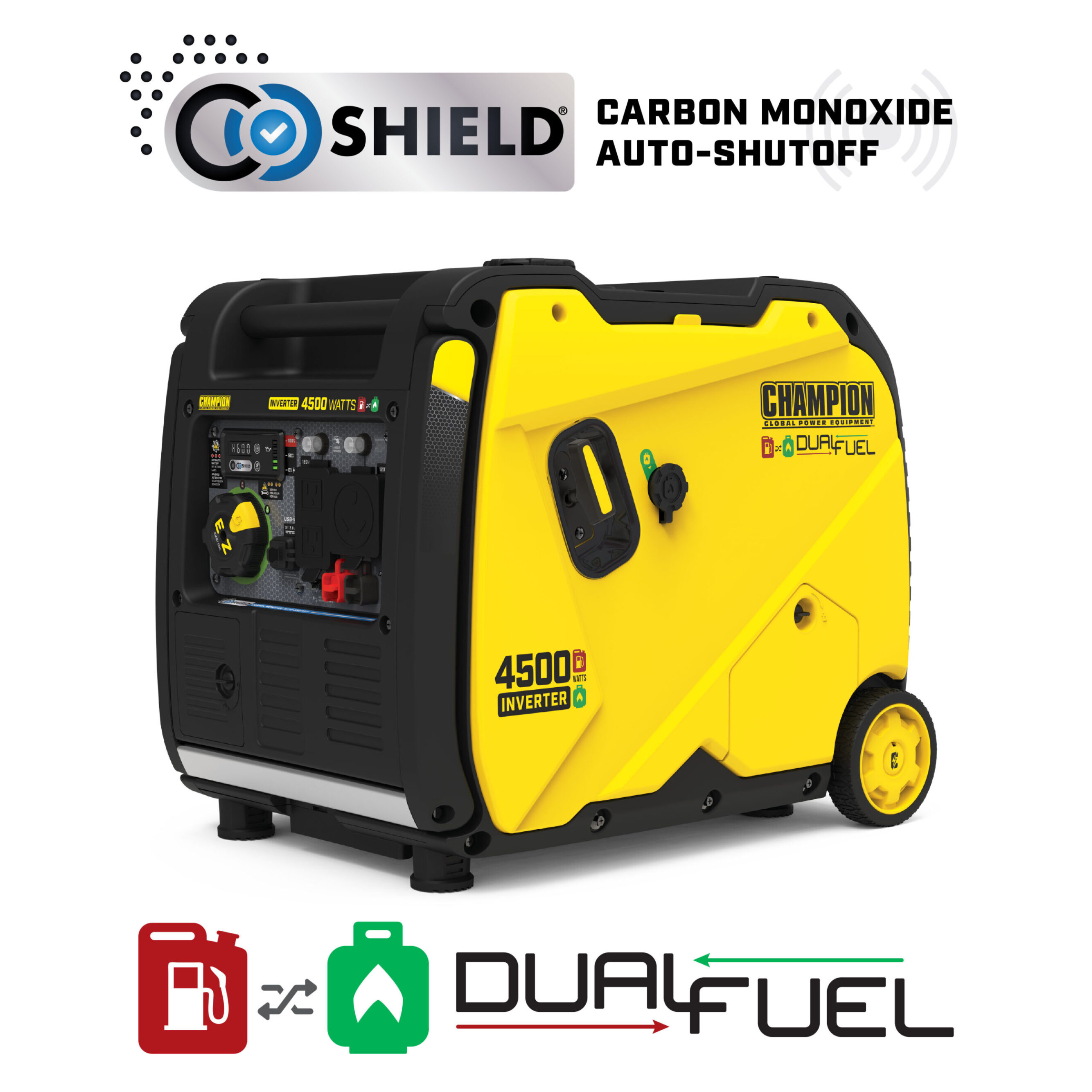 Our pickChampion 4500 W dual fuel inverter generatorThe essentials for most homes, gas or propane
Check price
 Most of the houseWestinghouse WGen9500DF dual fuel generatorMost of a house, a 240 V well pump included
Check price
Inverter or open-frame?
Inverter generators (the Honda and the Champion here) make clean power that is safe for laptops and medical devices, run much quieter, and throttle down at light load to save fuel. Open-frame generators (the Westinghouse) give far more watts per dollar and offer 240 V, but are louder. If you will run electronics from an open-frame unit, plug them into a power station or a UPS charged from it.
Gas, propane or both
Gas stations need power to pump, so in a long outage fuel is the limit. A dual-fuel generator also runs on propane, which stores for years without going stale and comes in tanks you can keep outside. Gasoline goes stale in storage, so add fuel stabilizer and rotate it. The Honda's 0.95-gallon tank lasts about 8.1 hours at a quarter load and about 3.2 hours at full load (Honda), so a day of light use takes about 3 gallons.
The rules that keep people alive
Carbon monoxide from portable generators kills about 100 people a year in the US (CPSC).
- Outdoors only, at least 20 feet from the house, with the exhaust pointed away from windows and doors (CDC, CPSC). Never in a garage, basement or shed, even with the door open.
- Battery carbon monoxide alarms inside, on every level. Several newer generators also shut themselves off when they sense CO; look for that feature.
- Never plug a generator into a wall outlet to power the house. That "backfeed" can electrocute utility workers and neighbors. Use extension cords to each appliance, or a transfer switch or interlock fitted by an electrician.
- Keep it dry and let it cool before refueling.
Or a battery instead?
A power station is silent, makes no exhaust and can sit in the bedroom, but holds a fixed amount of energy. For a fridge, Wi-Fi, lights and a CPAP for a day or two it is often the better buy; for a week of outage, a well pump or air conditioning, a generator wins. Many households pair a small inverter generator with a power station: the generator recharges the battery for a few hours, then the house runs silent overnight. Power station vs generator, compared.
Keeping the fridge, Wi-Fi and phones going too? See how many hours each power station runs the things you would plug in.
Common questions
What size generator do I need to run a refrigerator?
About 150 W running and 1,200 W starting for a typical full-size fridge, so even a 1,800 W inverter generator runs one with room for lights, Wi-Fi and phones.
Will a 2,200 W generator run a sump pump?
Yes. A 1/3 HP sump pump runs on about 800 W and needs about 1,300 W to start. With a fridge, lights and Wi-Fi also on, the total is about 1,005 W running and 2,055 W starting, which fits a 2,200 W unit with 145 W to spare. A 3,500 W unit leaves room for a freezer and furnace too.
What size generator runs a well pump?
Most well pumps run on 240 V, so you need a generator with a 240 V outlet, and a 1/2 HP pump needs about 2,150 W to start. In practice that means a 9,500 W class open-frame generator connected through a transfer switch by an electrician.
How far from the house should a generator be?
At least 20 feet, outdoors, with the exhaust pointed away from windows and doors (CDC, CPSC). Never in a garage, even with the door open.
Can I plug a generator into a wall outlet?
No. Backfeeding through an outlet can electrocute utility workers and start fires, and it is illegal in most places. Use extension cords or have an electrician install a transfer switch or interlock.
Sources
- CDC: Carbon monoxide poisoning prevention
- CPSC: Portable generator safety
- Honda: EU2200i technical specifications
- Westinghouse: WGen9500DF
- Champion Power Equipment: 4500 W dual fuel inverter
Checked October 29, 2026. Product ratings are from each maker's listing. See our editorial standards.