Which power station will run a CPAP all night?
Plan on about 40 W for a CPAP without the humidifier. At that draw it uses about 320 Wh for an 8-hour night, so a small 288 Wh unit gets you about 6.1 hours, most of a night, and a 1 kWh unit covers about three nights. With the heated humidifier on, plan on about 90 W, which cuts every runtime to about 44% of the figures below. Both are planning figures with margin: ResMed lists the AirSense 10 at 53 W typical with its humidifier, and most machines draw much less with it off. Your machine's own power report or a plug-in meter gives your real number.
On this page

5-year maker warranty · checkout and delivery on Amazon
Complete the kit: 200 W Goal Zero solar panel · 12-gauge extension cord · Kill A Watt meter
Not medical advice. A power station is not a medical-grade backup. Confirm your device's power draw and your outage plan with your equipment supplier or doctor, keep a second source of power or oxygen, and sign up for your utility's medical-needs list.
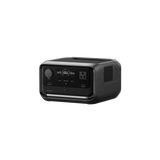 EcoFlow RIVER 3 Plus286 Whtoo small
 Bluetti Elite 30 V2288 Whtoo small
 Jackery Explorer 300293 Whtoo small
 Goal Zero Yeti 500499 Wh1.3 days
 Goal Zero Yeti 700677 Wh1.8 days
 Bluetti Elite 100 V21,024 Wh2.7 days
 Anker SOLIX C1000 Gen 21,024 Wh2.7 days
 EcoFlow DELTA 31,024 Wh2.7 days
 Jackery Explorer 1000 v21,070 Wh2.8 days
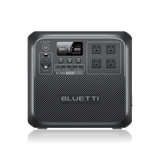 Bluetti AC1801,152 Wh3.1 days
 Goal Zero Yeti 15001,505 Wh4 days
 Anker SOLIX S20002,010 Wh5.3 days
 Jackery Explorer 2000 v22,042 Wh5.4 days
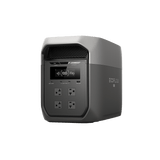 EcoFlow DELTA 3 Max2,048 Wh5.4 days
 Anker SOLIX C2000 Gen 22,048 Wh5.4 days
 Bluetti Elite 200 V22,074 Wh5.5 days
 Bluetti Apex 3002,765 Wh7.3 days
 Bluetti Elite 3003,014 Wh8 days
 Jackery HomePower 30003,072 Wh8.2 days
 Anker SOLIX F3800 Plus3,840 Wh10.2 days
 Goal Zero Yeti PRO 40003,994 Wh10.6 days
 EcoFlow DELTA Pro 34,096 Wh10.9 days
Humidifier on or off changes everything
The heated humidifier and heated tube use more power than the blower itself; ResMed rates the AirSense 10 at 53 W typical and 104 W peak with them on. We plan on 40 W without and 90 W with. On the Bluetti Elite 100 V2 that is the difference between 22 hours and 9.7 hours. During an outage, switch the humidifier off or set it to its lowest setting.
Nights per charge
| Unit | Battery | Nights, no humidifier | Nights, humidifier on |
|---|---|---|---|
| Bluetti Elite 30 V2 | 288 Wh | 0.8 | 0.3 |
| EcoFlow RIVER 3 Plus | 286 Wh | 0.8 | 0.3 |
| Goal Zero Yeti 500 | 499 Wh | 1.3 | 0.6 |
| Goal Zero Yeti 700 | 677 Wh | 1.8 | 0.8 |
| Bluetti Elite 100 V2 | 1,024 Wh | 2.7 | 1.2 |
| EcoFlow DELTA 3 | 1,024 Wh | 2.7 | 1.2 |
Nights = runtime ÷ 8 hours. Fractions under 1.0 will not get you through a full night.
Use the DC port if your machine has one
Most CPAPs run on 12 V or 24 V DC. A DC cable or converter from the CPAP maker (ResMed sells one for the AirSense 10 that takes 12 V or 24 V) lets you plug straight into the power station's 12 V car port and skip the inverter, which adds about 10 to 15% to every runtime above and usually keeps the station's fan off.
Pick by how many nights you need
A full night needs 376 Wh from the battery, so the 300 Wh class (Bluetti Elite 30 V2, EcoFlow RIVER 3 Plus) gets you most of a night but not all of it; the DC cable above gets it closer. The Goal Zero Yeti 500 at $500 is the smallest unit here that covers a full night through the inverter. A long weekend or any use with the humidifier: the Bluetti Elite 100 V2 at $549 or the EcoFlow DELTA 3 at $599. One 200 W panel puts back about 600 to 850 Wh on a sunny day, more than a night of CPAP.
The units that fit
We earn a commission if you buy through these links. It does not change the ranking (how we rate).

Yeti 500
Cheapest unit that covers the CPAP for about 1.3 days.
5-year maker warranty · checkout and delivery on Amazon
Spec source
Yeti 700
Extra headroom: about 1.8 days on one charge.
5-year maker warranty · checkout and delivery on Amazon
Spec sourceRanked list: Best power station for a CPAP
Full specs and runtimes: Goal Zero Yeti 500, Goal Zero Yeti 700.
Prices are each maker's own store price on the date shown on each card; buy links go to Amazon, where the price can differ, and Bluetti units also link to Bluetti's own store. Adjust the devices and days in the finder for your own numbers, or see all 22 models.
Already have one, or eyeing one? Check your model
- Can the Jackery Explorer 300 run a CPAP?
- Can the EcoFlow RIVER 3 Plus run a CPAP?
- Can the Bluetti Elite 30 V2 run a CPAP?
- Can the Goal Zero Yeti 500 run a CPAP?
- Can the Anker SOLIX C1000 Gen 2 run a CPAP?
- Can the Bluetti Elite 100 V2 run a CPAP?
- Can the Bluetti AC180 run a CPAP?
- Can the Jackery Explorer 1000 v2 run a CPAP?
- Can the EcoFlow DELTA 3 run a CPAP?
- Can the Anker SOLIX S2000 run a CPAP?
- Can the Goal Zero Yeti 700 run a CPAP?
- Can the EcoFlow DELTA 3 Max run a CPAP?
- Can the Bluetti Elite 200 V2 run a CPAP?
- Can the Anker SOLIX C2000 Gen 2 run a CPAP?
- Can the Jackery Explorer 2000 v2 run a CPAP?
- Can the Bluetti Elite 300 run a CPAP?
- Can the Jackery HomePower 3000 run a CPAP?
- Can the Goal Zero Yeti 1500 run a CPAP?
- Can the Bluetti Apex 300 run a CPAP?
- Can the Anker SOLIX F3800 Plus run a CPAP?
- Can the EcoFlow DELTA Pro 3 run a CPAP?
- Can the Goal Zero Yeti PRO 4000 run a CPAP?
Worth adding
- Goal Zero Nomad 200 solar panel: 200 W from the same brand, so the plug fits. On a sunny day it puts back roughly 600 to 850 Wh after real-world losses.
- P3 Kill A Watt P4400 plug-in meter: Reads the real watts and watt-hours of anything you plug into it, so you size from your own fridge instead of our typical figure.
Amazon links; we may earn a commission.
Common questions
Can I run a CPAP from a power bank?
Some travel CPAPs can run from a 65 W or larger USB-C PD power bank with the right cable; check with the maker first. A standard home CPAP needs an AC or 12 V source, which is where a power station comes in.
Will the power station fan keep me awake?
At a CPAP's draw the fan on most units runs slowly or not at all, but this varies by model. The DC port route above avoids the inverter, which is what usually brings the fan on.